
Maybe you noticed it while flossing last week, a small gap that wasn’t there before. Or maybe your lower teeth look a little more crowded than you remember. You wore your braces for months (or years), attended every adjustment appointment, and finally got them off. So why does your smile look different now?
If your once-straight teeth are starting to look crooked again, you’re not alone. Orthodontic relapse, when teeth gradually drift back toward their original positions, is one of the most common concerns patients raise with their orthodontist. Understanding what’s going on helps you take action early, before minor shifting turns into something that requires more involved treatment.
Here’s what’s actually happening and what you can do about it.
What Is Orthodontic Relapse, and Why Are Your Teeth Shifting?
Orthodontic relapse is when teeth gradually drift back toward their pre-treatment positions after braces or aligners are removed. It happens because the periodontal ligaments connecting each tooth to the surrounding bone retain a “memory” of where teeth used to sit, creating a natural pull back toward the original alignment. Board-certified orthodontists see this regularly, and it doesn’t mean your original treatment failed.
Your teeth aren’t set in concrete. They’re held in place by those periodontal ligaments, tiny fibers that act like elastic bands with a long memory. Even after months of braces applying steady pressure, these fibers retain some tendency to pull teeth back where they started. The bone around your teeth also needs time to fully stabilize after treatment, which is one reason the first year after braces is especially important for retainer wear.
This shifting can happen within months of getting your braces off. Or it can creep up years later. Some patients notice changes in their 30s, 40s, or beyond, even decades after their original treatment ended. The degree of relapse varies from person to person, depending on the severity of the original misalignment, the type of treatment received, and how consistently retainers were worn afterward.
The good news? Understanding why relapse happens is the first step toward preventing it, or correcting it if it’s already started.
Why Do Teeth Shift and Start Looking Crooked After Braces Are Removed?
Several factors contribute to post-braces tooth movement. Some are within your control. Others are simply part of how your body changes over time.
The single biggest factor is retainer wear, or lack of it. When you skip nights or stop wearing your retainer altogether, there’s nothing holding your teeth in their corrected positions. Those periodontal ligaments start doing what they’ve always done, pulling teeth back toward familiar territory. It really is that straightforward.
As you age, your jawbone density changes and the soft tissues in your mouth continue to exert pressure on your teeth. These natural aging processes affect everyone, whether they’ve had braces or not. Bone remodeling is a lifelong process, and without a retainer acting as a stabilizer, even small changes in bone density can allow teeth to drift gradually.
Wisdom teeth eruption is often blamed for crowding, though research on this is mixed. In some cases, emerging wisdom teeth can contribute to shifting, particularly in the lower front teeth. Your orthodontist can evaluate whether your wisdom teeth are playing a role.
Oral habits like tongue thrusting, mouth breathing, and teeth grinding (bruxism) all put constant pressure on your teeth. Over time, that pressure adds up and can push teeth out of alignment. Bruxism is especially common in adults who don’t realize they grind at night, making it a hidden contributor to relapse.
Gum disease weakens the bone supporting your teeth. When that foundation becomes compromised, teeth can shift more easily and more dramatically. Keeping up with regular dental cleanings helps protect both your gum health and your orthodontic results.
According to the American Association of Orthodontists, retention is a lifelong commitment for most patients. Your teeth will always have some tendency to move, which is why consistent retainer wear matters so much.
Benefits of Addressing Teeth Shifting Early
Catching relapse early makes a real difference in how much treatment you’ll need. Here are the key reasons to act quickly:
- Shorter retreatment times and less involved correction
- Lower out-of-pocket costs compared to waiting
- Better long-term oral health outcomes
- Protection of your original orthodontic investment
How Does Early Intervention Prevent More Serious Misalignment?
Minor shifting is much easier to correct than teeth that have moved significantly. A quick check with your orthodontist can save you months of unnecessary treatment down the road.
Proper Alignment Supports Your Oral Health
Teeth that sit in their correct positions are easier to brush and floss effectively. Crowded or overlapping teeth create hiding spots for plaque, which increases your risk of cavities and gum disease over time.
Shifting Teeth Can Affect Your Jaw
When your bite shifts out of alignment, it can put extra stress on your temporomandibular joint (TMJ). Some patients develop jaw soreness, headaches, or clicking sounds as a result.
How Does Alignment Protect Your Orthodontic Investment?
You already put time and money into creating a beautiful smile. Addressing shifting early protects that investment and keeps your results looking great for years to come. Think of it as routine upkeep rather than starting over.
Retainer Types Compared: Fixed vs. Removable Options
Not all retainers work the same way. The best choice depends on your lifestyle, your relapse risk, and your orthodontist’s recommendation.
| Retainer Type | Visibility | Compliance Needed | Durability | Best For |
|---|---|---|---|---|
| Fixed (Bonded) | Hidden behind teeth | None, always in place | High (years) | High relapse risk, patients who may forget removables |
| Hawley (Removable) | Visible wire across front | Must wear as prescribed | Very high | Patients needing adjustability, those with bite issues |
| Clear Removable (Essix/Vivera) | Nearly invisible | Must wear as prescribed | Moderate (replace periodically) | Aesthetics-focused patients, mild retention needs |
Fixed Retainers
Fixed retainers are thin wires bonded to the back of your front teeth. You can’t see them, and you can’t forget to wear them. The tradeoff is they require extra attention when flossing and can break if you bite into something hard. Many patients find that a floss threader or water flosser makes cleaning around a bonded retainer much easier.
Hawley Retainers
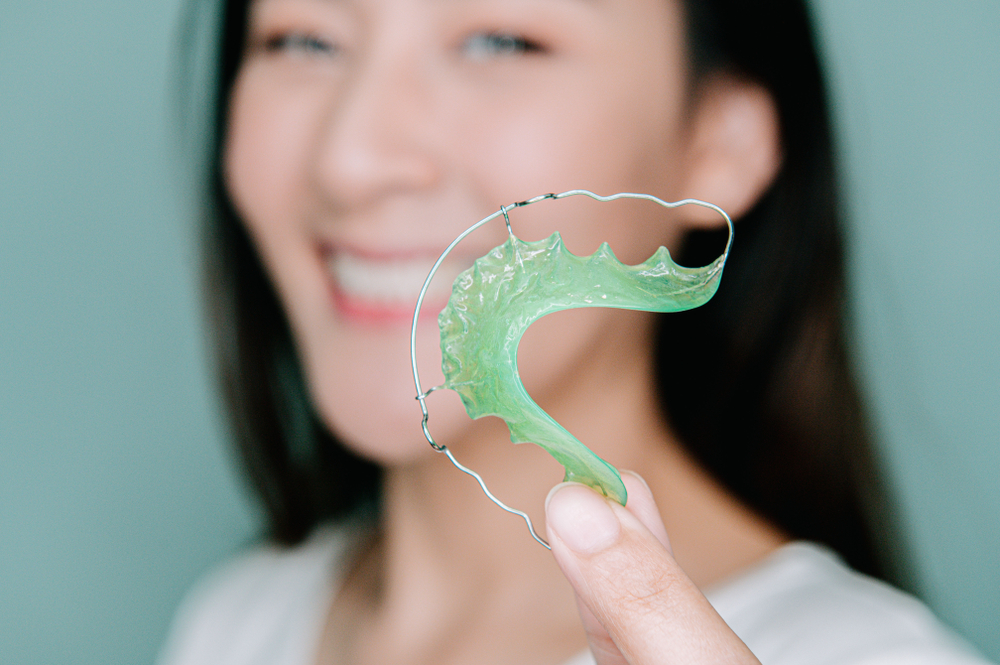
Hawley retainers are the classic design with an acrylic base and a metal wire. They’re durable and can be adjusted if minor tooth movement occurs. Because of their adjustability, they remain a popular choice for patients whose orthodontist wants the option to make small corrections over time.
Clear Removable Retainers
Clear removable retainers look similar to Invisalign trays. They’re discreet and comfortable, but they wear out over time and need replacement, typically every 6 to 12 months depending on wear patterns and grinding habits.
A board-certified orthodontist, with specialized training beyond dental school, will recommend the type that makes the most sense for your situation. Many patients do well with a combination: a bonded retainer on the lower teeth and a removable retainer for the upper arch.
What Does It Cost to Address Teeth That Shifted After Braces?
The cost of correcting teeth that shifted after braces depends on how much movement has occurred and the type of correction needed. Here’s a general breakdown.
Replacement retainers are the most affordable option if your teeth haven’t shifted much. Replacement retainers typically run $100 to $500 depending on the type and whether impressions or digital scans are needed. Your orthodontist can give you an exact quote during a free consult.
Retreatment with Invisalign or braces varies more widely. Minor relapse cases may qualify for limited treatment options, which generally range from $1,500 to $4,000, while more significant shifting could require a longer treatment plan at a higher price point.
Insurance coverage is worth checking into. Some dental insurance plans partially cover retreatment, particularly if the misalignment is causing functional issues or affecting your oral health.
The best way to get an accurate estimate? Schedule a free consult. An orthodontist can evaluate how far your teeth have shifted and discuss which correction options suit your budget and timeline. Many practices also offer low monthly payment options that make retreatment more accessible.
When Should You See an Orthodontist About Shifting Teeth?
Not every minor change requires treatment. Some settling in the first few months after braces is completely normal. But certain signs suggest it’s time for a professional evaluation.
Watch for gaps reopening between teeth that were closed during treatment, or crowding returning with teeth overlapping or rotating back toward their original positions. If your teeth are starting to look crooked again, neither of these situations will improve on its own.
You should also pay attention if your bite feels different. Changes in how your upper and lower teeth come together can indicate shifting that needs attention. Jaw discomfort, clicking, or difficulty chewing may be related to bite changes too.
And if your retainer doesn’t seat properly anymore, your teeth have likely moved beyond what the retainer can correct. That’s a clear signal to schedule a free consult.
Adults of any age can pursue retreatment. Whether you had braces as a teenager or in your 20s, options like Invisalign and modern braces can address relapse at any stage of life.
Frequently Asked Questions About Teeth Shifting After Braces
Can teeth shift even if I wear my retainer?
Some minor settling is normal, especially in the first year after braces. If you’re wearing your retainer consistently and still noticing significant movement, the retainer itself may be damaged, warped, or no longer fitting correctly. Bring it to your next visit so your orthodontist can check it.
How long do I need to wear a retainer?
Indefinitely. Most orthodontists now recommend wearing your retainer every night while you sleep, for life. Your jawbone and soft tissues never stop changing, which means the forces acting on your teeth never fully go away. Consistent retainer wear is the single most effective way to protect your results long term.
Can Invisalign correct teeth that shifted after braces?
Yes, and it’s actually one of the most popular options for correcting orthodontic relapse. For mild to moderate shifting, Invisalign can often straighten your smile again in less time than the original treatment took. Your orthodontist can determine if you’re a good candidate during a free consult.
Do wisdom teeth cause teeth to shift?
The research is mixed. Wisdom teeth have traditionally been blamed for lower front tooth crowding, but studies haven’t consistently supported this connection. Your orthodontist can evaluate whether your wisdom teeth are contributing to any changes.
Is it normal for teeth to move slightly after braces?
Yes, and this is an important distinction. Minor settling during the first few months is expected as your teeth find their final positions. This is different from relapse, which involves teeth moving back toward their original misaligned positions over a longer period. Wearing your retainer as prescribed helps ensure that settling stays minimal. If you’re unsure whether what you’re seeing is normal settling or actual relapse, a quick check with your orthodontist can give you peace of mind.
Noticing your teeth aren’t as straight as they used to be? If you’re concerned about shifting, an orthodontist can help evaluate your options. Early action often means simpler, more affordable care, and a quicker return to the results you worked for.