
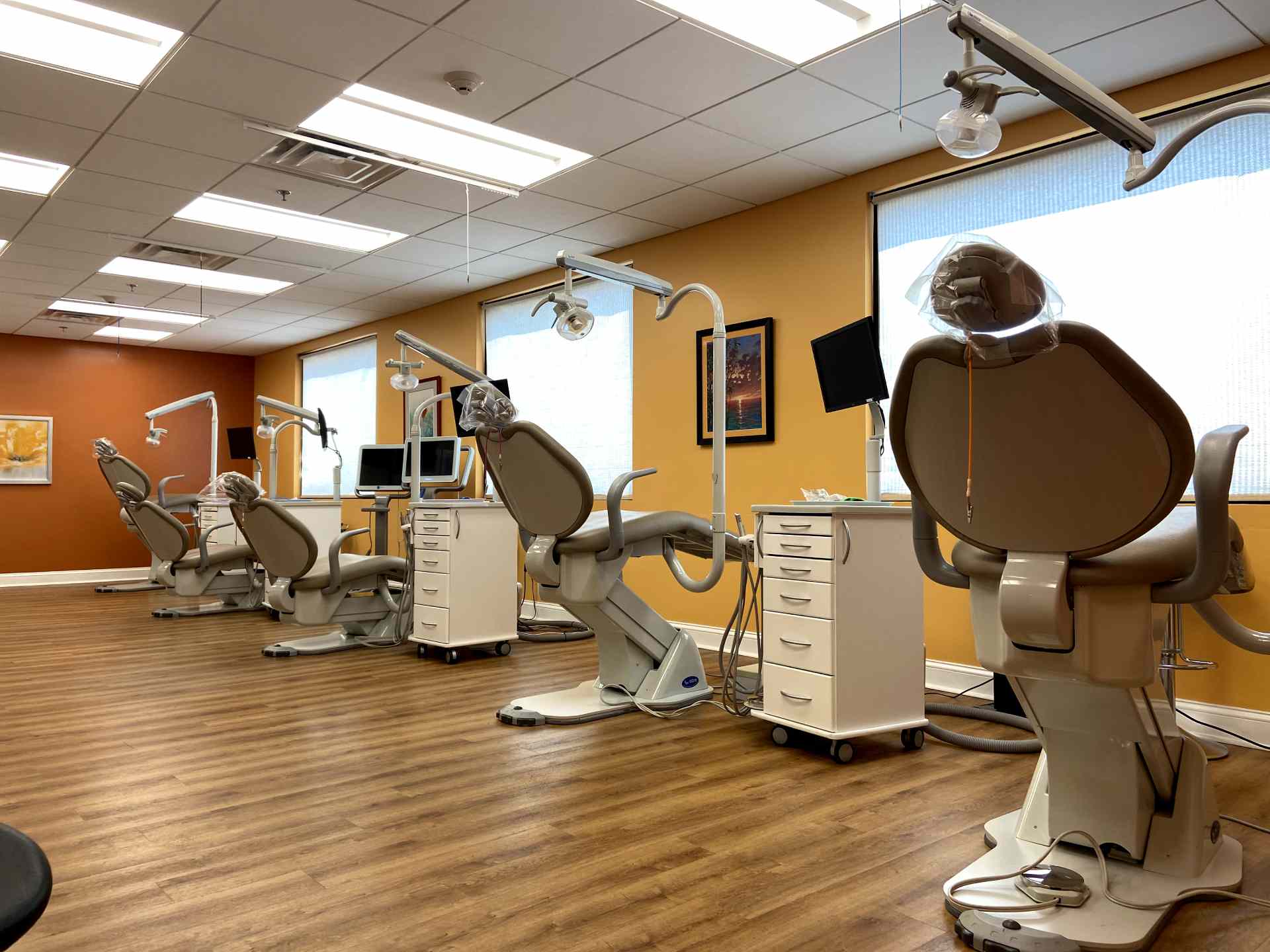
An impacted canine is an eyetooth that stays stuck under the gums or in the jawbone instead of erupting. Orthodontists usually treat it by making space, then guiding the tooth into place with braces, sometimes after a minor surgery exposes it.
The upper canines, also called eyeteeth, are some of the most important teeth in your smile. They anchor the corners of the arch, guide the way your jaws move when you chew and help support the shape of your lips. Because they erupt later than most front teeth and travel a long path to get there, they are among the teeth most likely to get stuck along the way.
What Does It Mean When a Canine Is Impacted?
A tooth is impacted when something blocks it from erupting into its normal position. Canines start developing high in the upper jaw, near the base of the nose, and slowly move down as a child grows. If the path is crowded or the tooth is angled the wrong way, it can stall under the gums or in the bone.
An impacted canine may sit toward the palate, toward the cheek or in the middle of the bone. Its position matters, because it affects how the tooth can be brought down and how long treatment may take. Lower canines can become impacted too, but upper canines are affected far more often.
What Causes an Impacted Canine?
There is often more than one cause. Crowding is a common one: if the teeth in front of the canine have already used up the space in the arch, there may be no room for it to erupt. Our post on what happens if you do not fix crowded teeth explains how crowding affects the rest of the mouth.
Other causes include a baby canine that does not fall out on time, an unusual angle as the tooth develops, extra teeth or growths blocking the path, missing or small neighboring teeth that fail to guide the canine down and a family tendency toward impaction. A narrow upper jaw can also leave too little room. In some children, more than one of these factors is present.
What Are the Signs of an Impacted Canine?
Many impacted canines cause no pain, which is why they are easy to miss at home. Parents may notice a baby canine that is still in place long after the other baby teeth are gone, a gap where the adult canine should be or an adult canine that seems to be coming in high on the gums or behind the other teeth.
Sometimes there is a bump on the palate or above the front teeth. Neighboring teeth may tip or shift into the space. In other cases, an impacted canine is first found on an X-ray taken for another reason. Our post on signs your child may need braces covers other changes worth mentioning to an orthodontist.
How Do Orthodontists Find an Impacted Canine?
Diagnosis starts with an exam and imaging. We use digital X-rays to see the teeth and bone and, when a case needs more detail, Cone Beam Computed Tomography (CBCT), which provides 3D images of the teeth, soft tissues, nerve pathways and bone in a single scan. A 3D view gives a detailed picture of where the canine sits and how close it is to the roots of nearby teeth. You can read about these tools on our orthodontic technology page.
Timing matters a great deal here. The American Association of Orthodontists recommends a first orthodontic check-up no later than age seven, when the first adult molars typically appear. An early visit gives your orthodontist a chance to watch how the permanent teeth are developing before problems are set. Our guide on your child’s first orthodontic visit explains what happens at that appointment.
How Is an Impacted Canine Treated?
Treatment depends on the child’s age, the tooth’s position and how much room is available. The goal is almost always to keep the canine and bring it into the arch.
| Approach | When it is used | What it involves |
|---|---|---|
| Early space creation | Younger children with crowding or a narrow upper jaw | Guiding jaw growth or expanding the palate so the canine has room |
| Removing the baby canine | When the baby tooth is blocking the path | The adult canine may then erupt on its own over time |
| Exposure and guided eruption | When the tooth will not come down on its own | A minor surgery uncovers the tooth, then braces gently pull it into place |
| Removing the impacted tooth | Rare cases where the tooth cannot be moved safely | The space is closed or restored as part of the overall plan |
In younger patients, catching the problem early can sometimes let the canine come in without surgery. Our Dentofacial Orthopedics treatment guides facial bone growth for proper harmony between the jaws, which helps create the correct space for permanent teeth and reduces the likelihood of impacted teeth. Learn more about it on our other orthodontic treatments page, and see how expansion fits into that process in our post on why palate expander timing matters.
When a canine needs to be uncovered, the exposure is a minor procedure. A small bracket or button is attached to the tooth, and the braces apply light, steady force to bring it down over several months. Your orthodontist will coordinate the next steps with you, and CBCT images can help with that surgical planning.
What Is Recovery Like After a Canine Exposure?
For most patients, an exposure is a short procedure, and recovery is fairly quick. Mild soreness and some swelling for a few days are common. Soft foods, cool drinks and gentle rinsing usually help, and the surgeon will give specific aftercare instructions to follow at home.
Once the area heals, the orthodontic part begins. Each visit, the braces are adjusted to keep the light pull going as the canine moves down. The tooth often looks a little different from its neighbors at first, with gum tissue that needs time to settle. Keeping the area clean with careful brushing is important while the tooth is moving, because plaque can collect around the small attachment and the brackets.
What Happens If an Impacted Canine Is Not Treated?
An impacted canine left in place can cause problems over time. It can press against the roots of neighboring teeth and damage them, push other teeth out of line, leave a gap in the smile or, less often, form a cyst around the crown. The baby canine that stays in place usually is not strong enough to last a lifetime.
Older teens and adults can still be treated, but the tooth may move more slowly as the bone matures. That is one reason an early evaluation is so useful.
Frequently Asked Questions
Does an impacted canine hurt?
Often it does not, which is why many are found during an orthodontic exam or on an X-ray. Pain or swelling around the area should be checked promptly.
Can an impacted canine come in on its own?
Sometimes, especially in younger children when space is created or a baby canine is removed early. Your orthodontist will monitor the tooth with imaging to see if it is moving.
How long does it take to bring down an impacted canine?
It varies with the tooth’s position and the patient’s age. The tooth is moved slowly with light force, so the process usually takes several months as part of a full braces plan.
Can adults have an impacted canine treated?
Yes, many adults can. Treatment may take longer because adult bone is more mature, and in some cases other options are discussed.
Schedule an Evaluation for Your Child
If your child still has a baby canine, has a gap where an eyetooth should be or has not had an orthodontic check-up yet, an early look can make treatment simpler. Schedule a free consultation at any of our six Massachusetts offices, and our orthodontists will review how the permanent teeth are developing.