
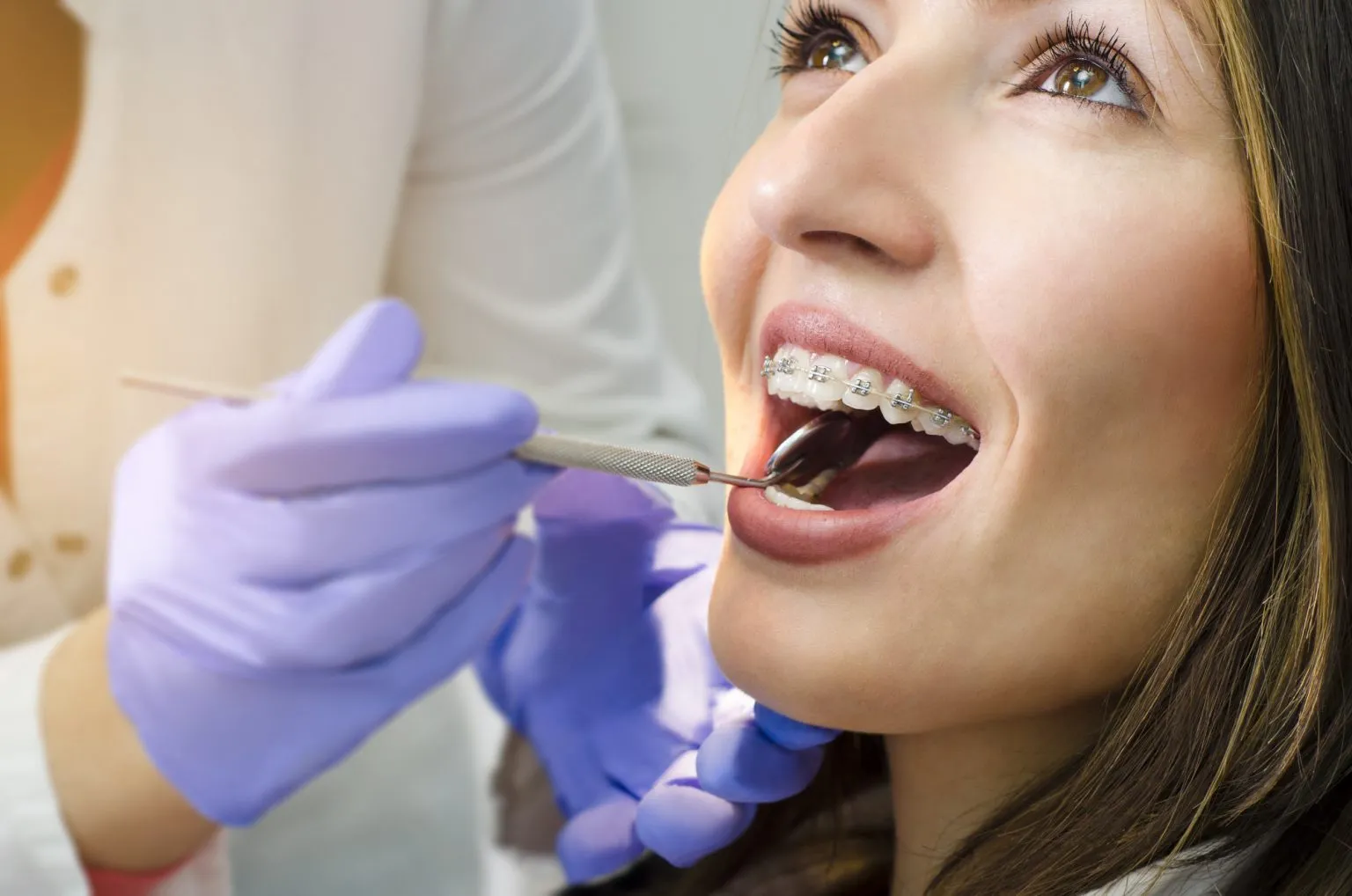
Can I Get Braces If I Have Crowns? What You Need to Know
If you have dental crowns and want straighter teeth, you’re probably wondering whether braces are still an option. Good news: crowns don’t rule out braces. They do require some special considerations during orthodontic treatment, but they don’t automatically disqualify you from achieving the smile you want.
Understanding Dental Crowns and How They Affect Orthodontic Treatment
Crowns can affect how orthodontic brackets bond to teeth, but they don’t prevent treatment. Dental crowns are protective caps placed over damaged, weakened, or cosmetically flawed teeth. While their smooth surfaces bond differently than natural enamel, orthodontists use specialized adhesives and techniques to attach brackets securely to crowns made of porcelain, ceramic, metal alloys, and porcelain-fused-to-metal combinations. Each material has different properties that influence the bonding approach.
The key difference between crowns and natural teeth is the surface texture. Natural tooth enamel has microscopic pores that allow dental adhesives to create a strong mechanical bond. Crown materials, especially glazed porcelain and polished metal, have smoother surfaces that require different bonding approaches.
During your orthodontic evaluation, your orthodontist will assess your crowns’ location, material, and condition. This information helps determine the best treatment approach for your teeth and existing dental work.
How Braces Work When You Have Dental Crowns
Getting with crowns isn’t complicated. It just requires some additional planning and specialized techniques. Your orthodontist has several options for attaching brackets to crowned teeth effectively.
Bonding Brackets to Crown Surfaces
Traditional brackets can be bonded directly to crowns using specialized dental adhesives designed for non-enamel surfaces. The process varies depending on your crown material:
Porcelain and ceramic crowns often need surface preparation before bonding. Your orthodontist will lightly roughen the glazed surface or apply a silane coupling agent to improve adhesion. Some practices use sandblasting to create microscopic texture that helps the adhesive grip better.
Metal crowns require a different protocol entirely. Metal-specific bonding agents and primers help create a chemical bond between the bracket and the crown surface. Your orthodontist can also consider mechanical retention methods.
Porcelain-fused-to-metal crowns present a hybrid situation. The bonding approach depends on whether the bracket will attach to the porcelain portion or the metal collar near the gumline.
Alternative Attachment Methods
When bonding to a crown seems risky or unreliable, orthodontists can use bands instead of brackets. Bands are metal rings that wrap completely around the tooth, providing a secure grip without relying solely on adhesive. This approach is especially useful for molars with full-coverage crowns.
Your treatment plan will account for crown positions throughout the tooth movement process. Orthodontists carefully calculate the forces applied to crowned teeth to avoid putting excessive stress on the restoration or the underlying tooth structure.
Benefits of Getting Braces Even If You Have Crowns
Orthodontic treatment with crowns can deliver real, lasting improvements. Key benefits include:
- Better bite alignment that protects existing restorations from uneven wear
- More even distribution of chewing forces across all teeth
- Easier brushing and flossing when crowded or spaced teeth are corrected
- A more uniform smile that brings natural teeth and crowned teeth into proper position
- Longer lifespan for your dental work overall
Here’s a closer look at how these benefits play out.
Alignment Helps Protect Existing Crowns
Properly aligned teeth distribute chewing forces evenly, which helps crowns last longer. When teeth don’t meet correctly, some crowns bear more stress than they should. Over time, that uneven pressure can shorten the lifespan of your dental work. Braces correct bite alignment issues that crowns alone cannot address. The result? Your restorations hold up better because each tooth, whether natural or restored, handles its fair share of the workload.
Bite Correction and Oral Health
Crowded or spaced teeth are harder to clean effectively. Gaps between teeth trap food and bacteria, and overlapping teeth make flossing difficult. Braces close those gaps and straighten overlapping areas, making daily brushing and flossing far more effective.
Beyond hygiene, a corrected bite also creates a more uniform smile appearance by aligning both natural teeth and crowned teeth into proper position. That’s a win for both function and aesthetics.
Braces vs. Invisalign vs. Other Options for Patients with Crowns
Not all work the same way with dental crowns. Traditional braces, Invisalign, ceramic braces, and lingual braces each interact differently with crowned teeth. Here’s how they compare:
| Treatment Type | How It Works with Crowns | Best For |
|---|---|---|
| Traditional Metal Braces | Brackets bonded directly to crowns with specialized adhesives | Complex cases that need precise tooth-by-tooth control |
| Invisalign Clear Aligners | Aligners grip teeth without brackets, so no bonding to crowns needed | Works well when you have multiple front-tooth crowns |
| Ceramic Braces | Similar to metal braces but less visible, same bonding considerations | A subtler look without switching to aligners |
| Lingual Braces | Brackets placed behind teeth, can avoid crowned surfaces entirely | Good pick if aesthetics matter most to you |
How Traditional Braces Compare to Clear Aligners for Crowned Teeth
The biggest distinction comes down to bonding. Traditional braces require brackets to be attached directly to each tooth, including any crowns. That means your orthodontist needs to use specialized adhesives and surface preparation techniques for every crowned tooth in the arch. If a bracket debonds from a crown, it needs to be reattached, which can happen more often than with natural enamel.
Clear aligners like Invisalign skip the bonding step entirely. The trays sit over your teeth and apply pressure through direct contact. For patients with several crowns, this can simplify the treatment process and reduce the number of unplanned visits for rebonding.
Invisalign Often Works Well with Crowns
Invisalign works well with crowns because its clear plastic aligners fit over teeth without bonding brackets to the surface. Because there are no brackets involved, the crown surface issue becomes less relevant. The aligners apply gentle pressure through direct contact with the tooth or crown.
If you have crowns on your front teeth, is worth considering. You won’t have visible brackets on your restorations, and there’s no risk of bonding failure or surface damage.
That said, Invisalign isn’t right for every case. Complex bite corrections or severe crowding often require the precise control that traditional braces provide.
Pricing Factors for Orthodontic Treatment with Dental Crowns
Having crowns doesn’t dramatically increase your orthodontic treatment investment. A few factors can affect your total out-of-pocket amount, though.
Specialized bonding materials designed for crown surfaces can add minor fees to your treatment, typically in the range of $100 to $200 extra. These adhesives and primers are priced higher than standard orthodontic bonding agents because of their specialized chemistry. Crown replacement timing also matters. If a crown is old, loose, or deteriorating, your dentist might recommend replacing it before or after orthodontic treatment. That replacement is a separate investment from your braces and falls under restorative care.
Treatment complexity affects pricing more than crown presence alone. If your crowns require alternative attachment methods or more careful force calibration, your treatment plan might need adjustments. Orthodontic treatment typically ranges from $3,000 to $7,000 depending on the case. On the insurance side, coverage for orthodontics and restorative work often falls under different benefit categories, so check both portions of your plan to understand your financial responsibility.
Are You a Candidate for Braces with Crowns?
You’re a good candidate for braces with crowns if your crowns are stable, your gums are healthy, you have adequate bone support, and your oral hygiene is solid. Bridges and root canal-treated teeth require additional planning but don’t disqualify you.
Several factors shape the best approach:
- Crown condition plays a major role. Crowns that are loose, cracked, or deteriorating will likely need replacement before starting braces. A stable, well-maintained crown can handle orthodontic forces without issues.
- Bridges connect multiple teeth together, which limits how those teeth can move independently. If you have a bridge, your orthodontist will need to work around the bridgework or discuss other approaches with you.
- Even teeth that have had root canals and carry crowns can still be moved with braces. The tooth responds slightly differently to orthodontic forces, but treatment is possible in most cases.
- Healthy gums, adequate bone support, and good hygiene habits set you up for successful treatment. Overall oral health is the foundation everything else builds on.
A thorough exam including X-rays and digital scans gives your orthodontist the full picture. According to the American Association of Orthodontists, adults of all ages can benefit from orthodontic treatment, including those with previous dental restorations. The key is finding an experienced orthodontist who understands how to work with your specific dental history.
Frequently Asked Questions About Braces and Crowns
Can braces damage a crown?
Braces rarely cause permanent damage to crowns. Brackets can occasionally debond from crown surfaces, but your orthodontist can rebond them or switch to an alternative attachment method. Crown materials are designed to withstand normal chewing forces, so the gentle pressure from braces is well within tolerance.
Can you get braces with crowns on front teeth?
This is one of the most common questions patients ask, and the answer is yes. Your orthodontist will use appropriate bonding techniques for the crown material. Many patients also consider for front-tooth crowns since aligners don’t require any bonding at all.
Can you get Invisalign with a crown?
Absolutely. Invisalign is often a great choice for patients with crowns because the clear aligners grip your teeth directly without needing brackets. This eliminates concerns about bonding to crown surfaces and potential adhesive failure.
Can you get braces with a bridge?
Yes, though the teeth connected by the bridge can’t move independently. Your orthodontist will plan treatment around the bridge, focusing on moving the teeth that aren’t attached to it. Careful planning up front saves time and frustration later.
What if a bracket falls off my crown?
It happens. Brackets can debond from any tooth surface, but it occurs more frequently on crowns due to the smoother surface. Call your orthodontist to schedule a rebonding visit. They might try a different adhesive or switch to a band instead of a bracket. Either way, it’s a common occurrence and nothing to stress about. If you’re a patient at ARCH Orthodontics, our team across the greater Boston area can get you back on track at your nearest practice location.