
Do Clear Aligners Really Work as Well as Braces? A Side-by-Side Comparison
If you’re weighing your orthodontic options, you’ve probably asked yourself this question: do clear aligners really work as well as braces? The short answer is yes, for many cases. Clear aligners like can deliver results comparable to traditional braces when treating mild-to-moderate crowding, spacing, and bite issues. The full answer, though, depends on your specific orthodontic needs, your lifestyle, and how consistently you wear your aligners.
Each option excels in different situations, and the results speak for themselves. Here’s how these two approaches actually compare, so you can figure out which one makes sense for you.
What Are Clear Aligners and How Do They Differ from Traditional Braces?
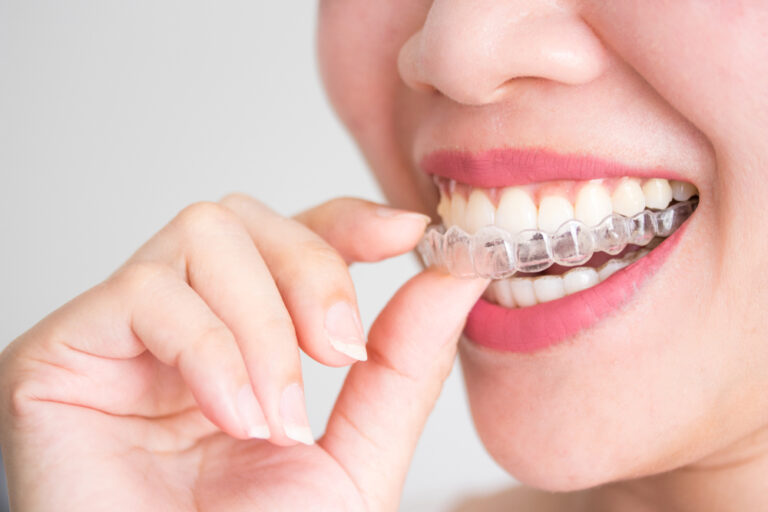
Clear aligners are removable plastic trays that gradually shift teeth into alignment. Traditional braces use fixed metal brackets and archwires. Both are orthodontist-supervised treatments that achieve similar results for many cases, but the differences come down to mechanics, appearance, and lifestyle impact.
Each set of custom-made aligner trays applies gentle, controlled pressure to shift your teeth gradually into their ideal positions. You’ll switch to a new set every one to two weeks, with each tray moving you closer to your final smile.
Traditional work differently. They use fixed metal or ceramic brackets bonded directly to your teeth, connected by archwires and secured with elastic ties. Your orthodontist adjusts the wire tension at regular visits, applying continuous force to guide your teeth into alignment.
Both treatments are prescribed and monitored by orthodontists, but they rely on fundamentally different mechanics to reach similar goals. Aligners like Invisalign use sophisticated 3D digital planning and computer-generated treatment sequences. Braces depend on your orthodontist’s expertise in making manual wire adjustments throughout your treatment.
Here’s what matters most: the real question isn’t whether aligners “work.” It’s which treatment approach works best for your specific case. A smile that responds beautifully to aligners might need braces if the underlying issues are more involved. That’s why an in-person evaluation with an orthodontist is so important before deciding on your treatment.
How Clear Aligners and Braces Move Your Teeth: The Science Behind Each
Understanding how each treatment moves your teeth helps explain why one might work better than the other for certain cases.
The Mechanics of Braces
Braces apply continuous, steady force through their archwire system. The wire “remembers” its original shape and constantly works to return to that form, pulling your teeth along with it. At each adjustment, your orthodontist bends or replaces the wire to redirect this force where it’s needed most.
This fixed system excels at complex movements. Root repositioning, significant tooth rotation, and vertical adjustments (moving teeth up or down) all benefit from the constant, multi-directional force that braces provide. Because the brackets are bonded to your teeth, the force never stops working. Not even while you sleep.
How Aligners Move Teeth Differently
Each aligner tray is slightly different from the last, engineered to move specific teeth in specific directions. When you put in a new tray, it doesn’t quite fit. That tension creates the pressure that shifts your teeth over the following one to two weeks. Simple concept, but the engineering behind it is remarkably precise.
Modern aligner systems use small tooth-colored attachments bonded to certain teeth. These bumps give the plastic trays something to grip, allowing for more complex movements than aligners could achieve alone. Digital planning software maps out your entire treatment from start to finish, calculating exactly how each tooth needs to move at each stage.
Retention After Treatment
Regardless of which treatment you choose, retention is essential after active treatment ends. You’ll need to wear to maintain your results long-term. Teeth have a natural tendency to drift back toward their original positions, especially in the first year after treatment.
Your orthodontist, ideally a member of the American Association of Orthodontists, will provide specific guidance on retainer wear based on your case. Protecting your results matters just as much as achieving them, and a customized retention plan makes all the difference.
Benefits of Clear Aligners vs. Benefits of Braces
Clear aligners offer better aesthetics and convenience, while braces excel at treating complex cases. The right choice depends on what matters most to you and what your teeth actually need.
Clear Aligner Advantages
The main advantages of clear aligners include:
- Nearly invisible appearance. Most people won’t notice you’re wearing them, making them popular with adults and image-conscious teens.
- Removable for eating and brushing. No food restrictions, and you can brush and floss normally. This alone is a big deal for many patients.
- Fewer emergency visits. No broken brackets or poking wires to deal with.
- Greater comfort. Smooth plastic means no metal irritating your cheeks, lips, or tongue. Most patients report less soreness overall compared to braces.
- Predictable digital planning. You can often see a simulation of your expected results before treatment even begins, which helps set realistic expectations.
Traditional Braces Advantages
The main advantages of traditional braces include:
- Effective for complex cases. Severe crowding, large bite corrections, and significant rotations respond well to fixed appliances.
- Built-in compliance. They’re always working because you can’t take them off. For some patients, this is a genuine relief.
- Versatile options. Metal, ceramic, and lingual (behind-the-teeth) varieties give you flexibility in how visible your treatment is.
- No risk of lost trays. You won’t misplace your treatment or forget to wear it, which eliminates one of the biggest variables in treatment success.
- Proven track record. Decades of refinement have made braces incredibly reliable for nearly any orthodontic issue.
- Better for younger patients. Kids and younger teens who may not be ready for the responsibility of removable trays often do better with a fixed option.
The Bottom Line on Benefits
Both clear aligners and braces deliver excellent results when matched to the right case and supervised by an experienced orthodontist. The “best” option is simply the one that fits your clinical needs, lifestyle, and personal preferences. An in-person evaluation is the most reliable way to determine which treatment will give you the outcome you’re looking for.
Do Clear Aligners Really Work as Well as Braces for Every Case?
Let’s compare how each treatment performs across different orthodontic situations.
| Treatment Factor | Clear Aligners | Traditional Braces |
|---|---|---|
| Mild crowding/spacing | Excellent results | Excellent results |
| Moderate crowding | Very effective with attachments | Very effective |
| Severe malocclusion | May require additional treatment | Gold standard |
| Overbite correction | Effective for mild-moderate | Effective for all severities |
| Underbite correction | Limited effectiveness | More predictable results |
| Complex rotations | Challenging; may need refinements | Highly effective |
| Typical treatment duration | 12-18 months (mild-moderate cases) | 18-24 months (comparable cases) |
| First visit frequency | Every 6-10 weeks | Every 4-8 weeks |
What the Research Shows
The professional consensus among orthodontists is that both clear aligners and braces can produce comparable results for mild-to-moderate orthodontic cases. The key difference lies in case selection. Aligners have expanded their capabilities significantly over the past decade, but braces remain the preferred choice for complex skeletal issues or severe bite irregularities that require precise, multi-directional tooth control.
Board-certified orthodontists who use both methods daily are best positioned to give you an honest recommendation, not a one-size-fits-all answer. That hands-on familiarity with both approaches matters more than most patients realize.
Compliance and Its Effect on Results
Here’s something critical to understand: aligner effectiveness depends heavily on patient compliance. You need to wear your trays 20-22 hours per day for them to work as planned. Remove them only for eating, drinking anything besides water, and brushing your teeth. Patients who wear their aligners inconsistently often experience slower progress or less predictable results.
Braces don’t have this variable. They’re fixed to your teeth, working around the clock whether you’re sleeping, eating, or going about your day. For patients who struggle with self-discipline or have busy, unpredictable schedules, this built-in compliance can be a real advantage.
Cost of Clear Aligners vs. Braces: What Affects the Price?
Clear aligners and traditional braces typically fall within a similar price range. The exact amount for your treatment depends on several factors, and the answer might surprise you: they’re often comparable.
Here’s what influences the final number:
- Case complexity. More severe issues require longer treatment and more resources.
- Treatment duration. Longer treatments generally cost more.
- Geographic location. Pricing varies by region and local market conditions.
- Provider expertise. Treatment from a specialized orthodontist may differ in price from what a general dentist charges for aligner services.
Insurance and Payment Options
Many dental insurance plans now cover clear aligners and braces equally under their orthodontic benefits. Check with your provider to understand your specific coverage.
The Problem with Mail-Order Aligners
You may have seen advertisements for mail-order aligner companies that promise lower pricing and convenience. These services differ significantly from orthodontist-supervised treatment. Without in-person examinations, X-rays, and professional monitoring, you risk complications that could end up costing more to address down the line.
Dental professionals have raised serious concerns about unsupervised orthodontic treatment, emphasizing the importance of professional oversight for safe, effective results. Working with a qualified orthodontist ensures that someone is watching your progress and can step in if something isn’t going as planned.
Are You a Candidate for Clear Aligners, Braces, or Both?
Not everyone is an ideal candidate for every treatment option. Here’s a general guide to help you understand where you might fit.
Strong Candidates for Clear Aligners
- If you have mild-to-moderate crowding or spacing
- Those with minor bite issues, such as a slight overbite, crossbite, or open bite
- Adults and teens who prioritize aesthetics during treatment
- Patients with good oral hygiene habits and the self-discipline to wear trays consistently
When Braces May Be the Better Choice
- Severe crowding requiring significant tooth movement
- Complex bite issues or jaw discrepancies that need multi-directional force
- Cases requiring precise root positioning
- Patients who may struggle with aligner compliance
- Younger patients whose teeth and jaws are still developing
- If you’d rather not think about whether you’re wearing your treatment enough each day
Using Both Treatments Together
Some patients benefit from a combination approach. Your orthodontist might recommend starting with braces to address complex movements, then transitioning to aligners for final refinements. This gives you the power of braces for the heavy lifting and the convenience of aligners for finishing touches.
Finding the Right Treatment for You
Only an in-person examination with X-rays and digital scans can determine which treatment will work best for you. Every mouth is different, and factors that aren’t visible in photos or self-assessments often influence the recommendation. A free consult with an experienced orthodontist is the best starting point for getting expert guidance without any obligation.
Frequently Asked Questions: Clear Aligners vs. Braces
Do clear aligners take longer than braces?
Clear aligners don’t necessarily take longer than braces. For mild-to-moderate cases, aligners often achieve results in 12-18 months, which can be comparable to or even faster than braces. Treatment duration depends more on your specific orthodontic needs than on the treatment type itself.
Can clear aligners correct an overbite?
Yes, clear aligners can effectively correct mild-to-moderate overbites using attachments and specific tray designs. Severe overbites with skeletal components may respond better to braces, which offer more precise control over complex bite mechanics.
Are clear aligners as effective as braces for teens?
When worn as directed, absolutely. Some aligner systems include compliance indicators (small blue dots that fade with wear) to help parents and orthodontists monitor whether teens are wearing their trays enough. Teens who commit to the 20-22 hours daily wear requirement achieve excellent results. AAO-member orthodontists typically monitor teen aligner compliance closely at every first visit.
Do aligners hurt less than braces?
Generally, yes. Aligners cause pressure and mild discomfort when you switch to a new tray, but this typically subsides within a day or two. You won’t experience the bracket irritation, poking wires, or mouth sores that can occur with braces.
Can you switch from aligners to braces mid-treatment?
Yes, orthodontists can adjust your treatment plan if needed. If aligners aren’t achieving the expected progress, or if your case turns out to be more involved than initially assessed, switching to braces is always an option. Flexibility is one advantage of working with an experienced orthodontic practice.
Are mail-order aligners the same as Invisalign from an orthodontist?
No, and this distinction matters. Orthodontist-supervised treatment includes thorough examinations, X-rays, professional monitoring, and the ability to address complications. Mail-order aligners skip these safeguards. Dental professionals have raised concerns that moving teeth without proper supervision can lead to serious complications, including bite irregularities and, in some cases, tooth loss. Your smile deserves the oversight that only a qualified orthodontist can provide.
What’s the best way to decide between aligners and braces?
The single best step you can take is scheduling a free consult with an orthodontist who works with both regularly. They’ll evaluate your teeth, take X-rays and digital scans, and give you a recommendation based on your specific situation rather than a generic answer. Many orthodontic practices, including ARCH Orthodontics across the Greater Boston and South Shore areas, offer these evaluations at no cost.